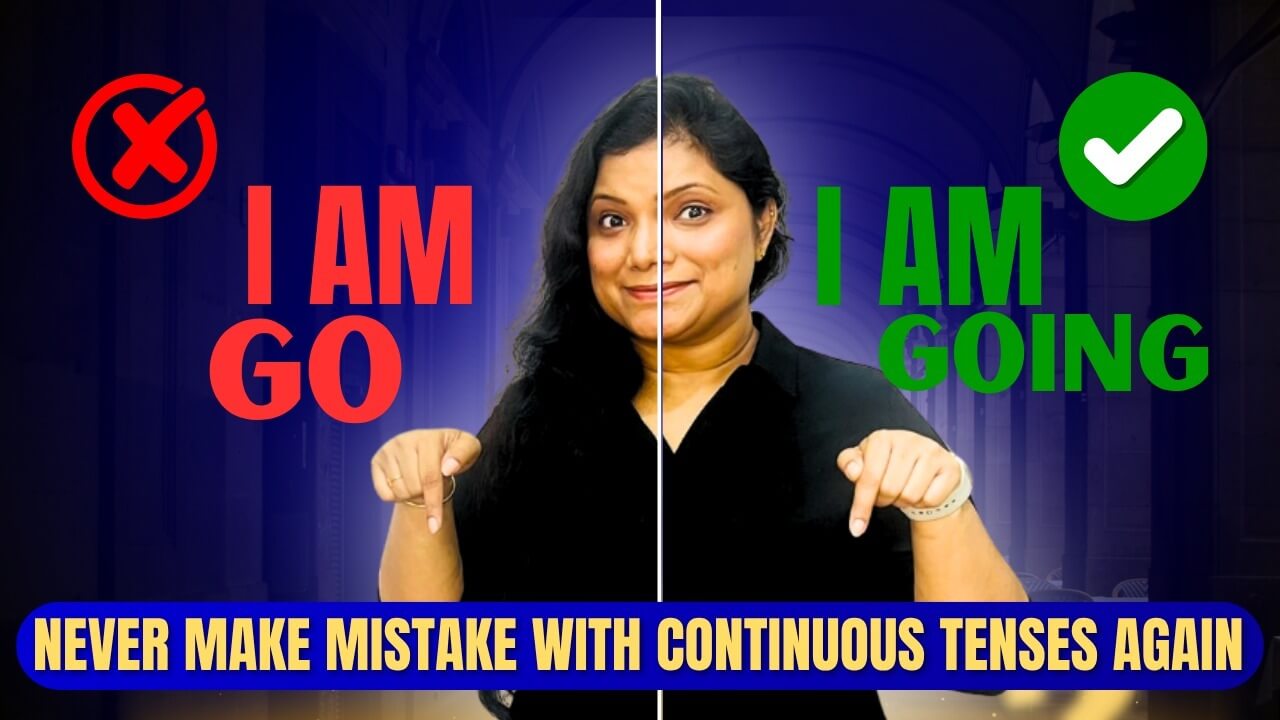
1️⃣ Structure Overview
Continuous Tense is divided into three main types:
- Present Continuous
- Past Continuous
- Future Continuous


 anju jindal November 6, 2025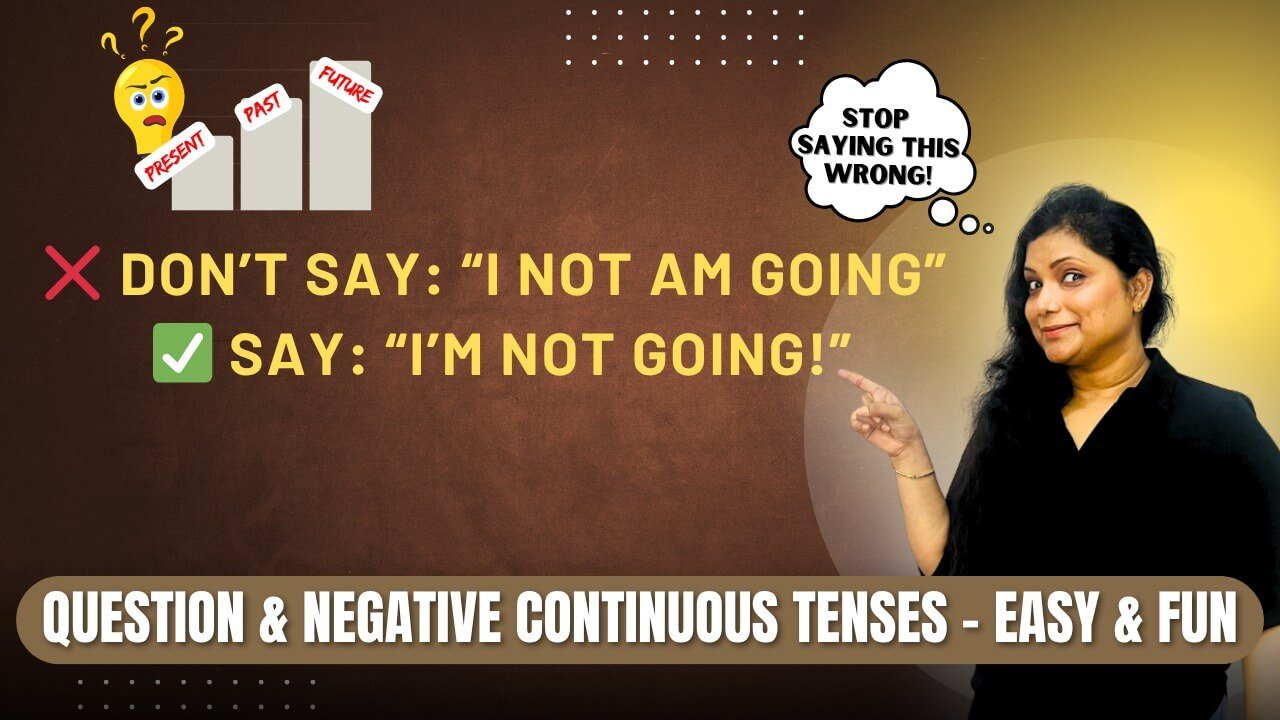
Short & simple guide + worksheet • By Anju Jindal
Have you ever said sentences like “I not eating” or “He not going”? 😅 Don’t worry — many learners do. In this post we’ll learn how to form negative, question, and negative question sentences in Present, Past and Future Continuous. Let’s make it simple and fun!
✅ Positive: I am eating.
❌ Negative: I am not eating.
❓ Question: Am I eating?
🚫 Negative Question: Am I not eating?
✅ Positive: I was watching TV.
❌ Negative: I was not watching TV.
❓ Question: Was I watching TV?
🚫 Negative Question: Was I not watching TV?
✅ Positive: I will be working.
❌ Negative: I will not be working.
❓ Question: Will I be working?
🚫 Negative Question: Will I not be working?
Try these before checking answers.
🚀 Your Turn! Write your answers in the comments and tag @anjs_englishhub if posting on Instagram or Shorts.
🎯 Quick Reminder: Continuous Tense = am/is/are + verb-ing (Present), was/were + verb-ing (Past), will be + verb-ing (Future).
👉 Want visuals and a full explainer? Watch the full video here: Continuous Tense Explainer (YouTube)
Also called Progressive Tense — shows ongoing actions: happening now, were happening earlier, or will happen in the future.
Continuous Tense is divided into three main types:
👉 Used to show an action happening right now or around this time.
Structure: Subject + is / am / are + Verb(+ing)
She is reading a book.
Structure: Subject + is/am/are + not + Verb(+ing)
She is not reading a book.
Is/Am/Are + Subject + Verb(+ing)?
Is she reading a book?
Isn’t/Amn’t/Aren’t + Subject + Verb(+ing)?
Isn't she reading a book?
👉 Used to describe an action that was happening in the past at a certain time.
Structure: Subject + was / were + Verb(+ing)
They were watching TV last night.
Subject + was/were + not + Verb(+ing)
They were not watching TV.
Were they watching TV?
Weren't they watching TV?
👉 Used to show an action that will be happening in the future for some duration.
Structure: Subject + will be + Verb(+ing)
I will be studying at 8 p.m. tonight.
I will not be studying at 8 p.m.
Will you be studying at 8 p.m.?
Won't you be studying at 8 p.m.?
Quick tip: If the verb describes a state or feeling (know, believe, love), use simple tense instead of continuous.
Learn Continuous (Progressive) Tense with easy examples and practical usage explained visually in this quick video lesson by Anju Jindal.