


 anju jindal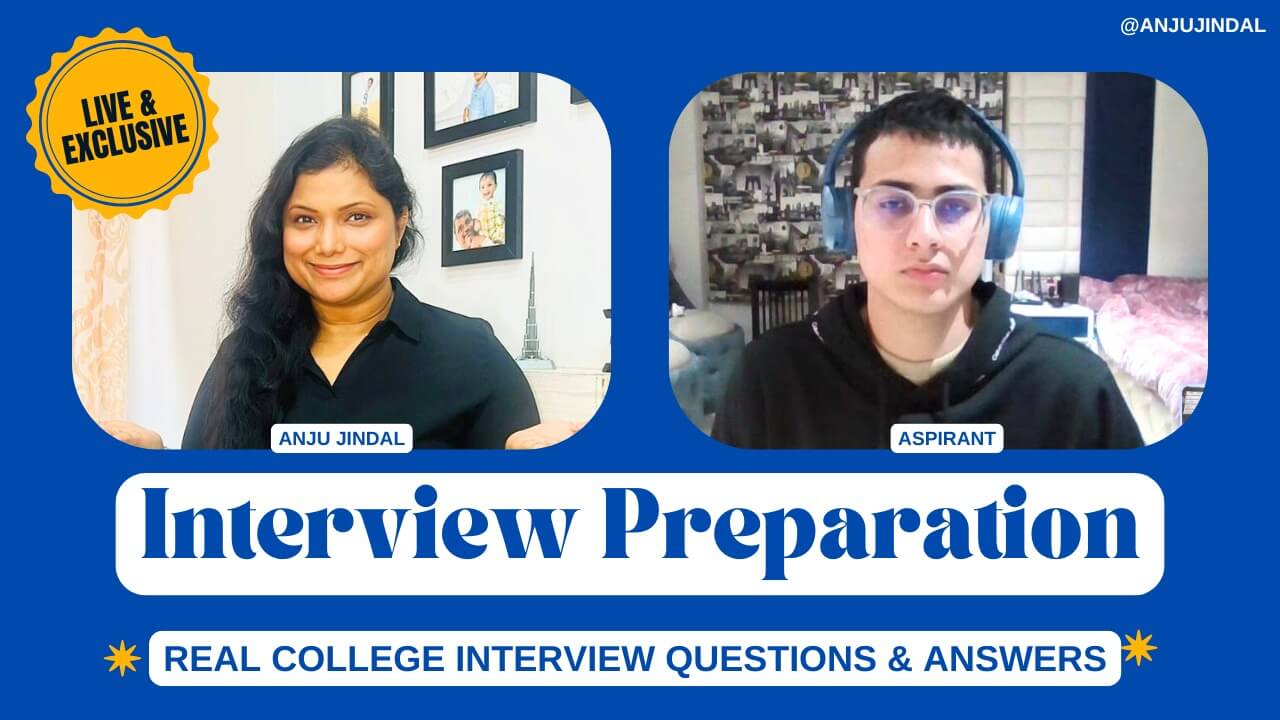
College Interview Is NOT an English Test
Smart Strategies to Answer Interview Questions With Confidence
For many students, a college interview feels scarier than the entrance exam itself.
The fear is usually not about knowledge —
it’s about English.
Questions like:
- What if my grammar is wrong?
- What if I forget words?
- What if my accent sounds weak?
Let’s start with the truth 👇
🎓 College interviews are not English exams.
They are tests of clarity, confidence, and thinking.
What Interviewers Are Really Looking For
Interviewers are not judging:
- ❌ accent
- ❌ fancy vocabulary
- ❌ memorised answers
They are observing:
- ✔️ how clearly you think
- ✔️ how calmly you speak
- ✔️ how honestly you respond
A student with simple English and clear thoughts always leaves a better impression than a student using big words without clarity.
Why Students Panic in Interviews
Most students panic because they:
- memorise answers instead of understanding them
- try to sound “advanced”
- rush while speaking
- fear silence
Good interviews are calm conversations, not speed tests.
The Golden Rule of Interview Answers
Clarity over complexity.
Honesty over perfection.
Calmness over speed.
Remember this, and half your fear disappears.
Smart Strategies to Answer Interview Questions
Let’s break this into practical techniques you can actually use.
Strategy 1: Use the PREP Method (Most Powerful)
This works for almost every interview question.
- P – Point
Say your main answer clearly. - R – Reason
Explain why you think so. - E – Example
Give a small real example. - P – Personal link
Connect it to yourself.
Example Question:
Why did you choose this course?
✔️ Answer using PREP:
“I chose this course because I enjoy understanding how things work.
I’ve always been curious about problem-solving.
For example, in school I enjoyed projects more than rote learning.
This course matches my interest and long-term goals.”
Simple. Clear. Confident.
Strategy 2: Start Slow, Not Fast
Students often rush because of nervousness.
Instead:
- Take 1–2 seconds before answering
- Start slowly
- Let your voice settle
Slow English sounds confident, even if it’s simple.
Strategy 3: Use Simple Sentence Structures
Complex English increases mistakes.
Prefer:
- ✔️ short sentences
- ✔️ clear structure
- ✔️ common words
Example:
❌ “I possess an inclination towards analytical reasoning…”
✔️ “I like analysing problems and finding solutions.”
Interviewers prefer the second one.
Strategy 4: The “Pause Is Power” Rule
Silence is not failure.
If you forget a word:
- pause
- rephrase
- continue
Example:
“I believe teamwork is important because…
(pause)
it helps people learn from each other.”
This shows control, not weakness.
Strategy 5: How to Answer “Tell Me About Yourself”
This is almost always the first question.
Simple 4-Step Structure:
- Your name & background
- Your academic interest
- One strength
- Your goal
✔️ Sample Answer:
“My name is ____. I’ve completed my schooling from ____.
I enjoy learning subjects that involve thinking and discussion.
I’m a disciplined and curious learner.
I want to build strong skills during my college years.”
No drama. No exaggeration. Just clarity.
Strategy 6: How to Answer Strengths & Weaknesses
Strengths:
- consistency
- willingness to learn
- teamwork
- discipline
Avoid generic claims like “I am perfect” or “I have no weaknesses.”
Weaknesses: The Smart Way
Use this formula 👇
Weakness + improvement effort
✔️ Example:
“I used to get nervous while speaking in public,
but I’ve started practising regularly and I’m improving.”
This shows self-awareness.
Strategy 7: If You Don’t Know the Answer
Never panic. Never lie.
Say this confidently:
“I’m not completely sure about that, but I think…”
or
“I haven’t studied that in detail yet, but I’m eager to learn.”
Interviewers respect honesty more than guessing.
Strategy 8: Body Language Matters Too
English is only part of communication.
- ✔️ sit straight
- ✔️ maintain soft eye contact
- ✔️ don’t fidget
- ✔️ smile naturally
Confidence is visible before you even speak.
Common Interview Questions to Practise
- Tell me about yourself.
- Why should we select you?
- What are your interests outside academics?
- How do you handle pressure?
- What are your future goals?
- What motivates you?
Write bullet points. Speak them out loud.
Final Message for Students
You don’t need perfect English.
You need clear thinking and calm delivery.
Confidence grows from:
- ✔️ practice
- ✔️ preparation
- ✔️ self-belief
Watch: College Interview Preparation Video
Prefer learning visually? Watch this student-friendly interview guidance video.
Want Guided Interview & Spoken English Training?
If you want:
- interview question frameworks
- real speaking practice
- confidence-building strategies
- English you can actually use
📩 DM “SPEAK”
🚀 Follow @anjs_englishhub
Because real interviews need real confidence — not fake English 💙
