



 anju jindal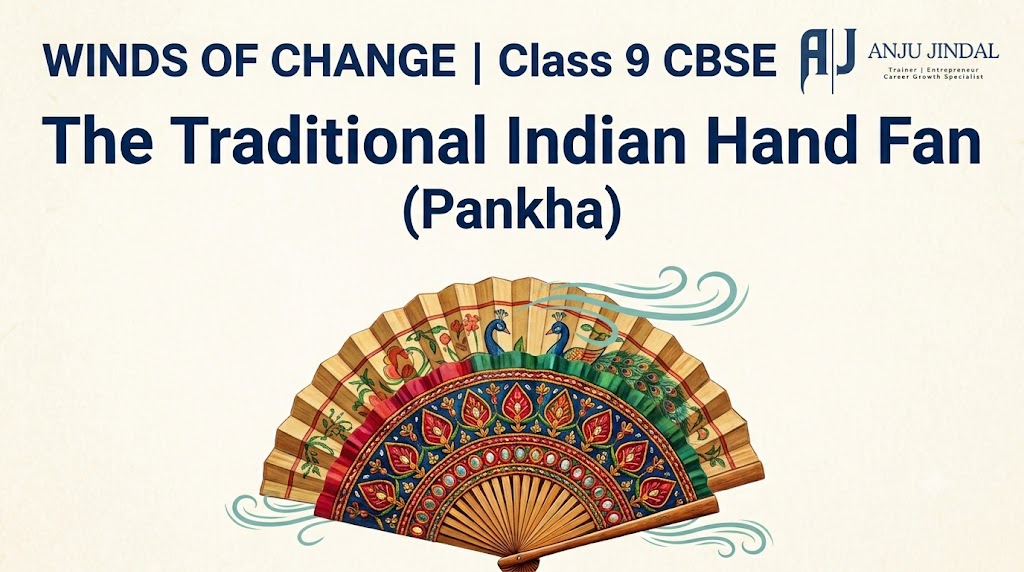
Winds of Change Class 9 Kaveri | Summary, Explanation, Question Answers, Themes & Complete CBSE Notes (2026)
📘 Complete CBSE Study Guide
If you're searching for Winds of Change Class 9 Summary, Explanation, Question Answers, and Notes, this complete guide is designed to help you understand the chapter in a simple and exam-oriented way.
The chapter "Winds of Change" from the CBSE Class 9 Kaveri textbook explores the fascinating story of the Indian hand fan (pankha). It explains how a simple object has evolved over centuries while remaining an important part of India's cultural heritage.
The chapter beautifully combines history, art, craftsmanship, and tradition, showing how ordinary objects often carry extraordinary stories.
Whether you are preparing for your school exams, periodic tests, or annual examinations, this guide covers everything according to the latest CBSE competency-based pattern.
Chapter Overview
The chapter introduces readers to the traditional Indian pankha, a handcrafted fan that has been used in homes, temples, palaces, and villages for centuries.
The author explains that although electric fans and air conditioners have become common, handcrafted fans continue to hold cultural and artistic value. They represent India's rich tradition of craftsmanship and remind us of the importance of preserving our heritage.
Through descriptions of different types of fans made from bamboo, palm leaves, cloth, and other natural materials, the chapter highlights the creativity and skills of Indian artisans.
The chapter also shows that change is inevitable. While technology transforms our lives, traditions should not disappear completely. Instead, they should adapt and continue to inspire future generations.
Detailed Summary
The chapter begins by introducing the traditional Indian hand fan, popularly known as the pankha. Long before electricity became available, people depended on handmade fans to stay cool during the hot summer months.
These fans were not merely functional objects. Skilled artisans decorated them with beautiful designs, colourful fabrics, embroidery, paintings, mirrors, and natural fibres. As a result, they became objects of beauty as well as utility.
The chapter describes how different regions of India developed their own unique styles of fans based on local materials and traditions. Some were made from palm leaves, while others used bamboo, cane, cloth, or woven grass. Every fan reflected the culture and artistic identity of its region.
The author also explains that hand fans were once symbols of royalty and respect. They were used in palaces, temples, religious ceremonies, and traditional celebrations. In many communities, beautifully decorated fans were presented as gifts during weddings and festivals.
As modern technology entered everyday life, electric fans gradually replaced traditional hand fans. Despite this change, many artisans continue to create handcrafted fans because they represent India's artistic heritage.
The chapter concludes by encouraging readers to appreciate traditional crafts and support local artisans. It reminds us that development should not erase our cultural identity. Instead, modern progress and traditional knowledge should coexist harmoniously.
Detailed Explanation
Beginning
The chapter starts by discussing India's warm climate and people's dependence on handmade fans before electricity became widespread.
The author introduces the hand fan as an essential household object that provided comfort during hot weather. More importantly, it became a canvas for artistic expression.
Simple everyday objects often reflect a nation's history and culture.
Middle
The author explains the variety of fans found across India.
Different regions use locally available materials such as:
- Bamboo
- Palm leaves
- Cane
- Cloth
- Grass
- Wood
These fans differ in colour, shape, decoration, and design, showcasing India's cultural diversity.
The chapter also explains that artisans pass these skills from one generation to another, preserving valuable traditional knowledge.
India's diversity is reflected even in its handicrafts.
Ending
The chapter concludes by comparing traditional fans with modern electrical appliances.
Although electric fans offer convenience, handmade fans continue to symbolize India's artistic traditions.
The author urges readers to appreciate local crafts and support artisans who preserve these traditions.
Progress should preserve culture rather than replace it.
Important Word Meanings
| Word | Meaning |
|---|---|
| Pankha | Traditional hand fan |
| Artisan | Skilled craftsperson |
| Heritage | Cultural legacy |
| Craftsmanship | Skill in making things by hand |
| Traditional | Following old customs |
| Decorative | Attractive and ornamental |
| Utility | Practical usefulness |
| Preservation | Protection from loss |
| Indigenous | Native to a place |
| Innovation | Introduction of new ideas |
Themes
1. Cultural Heritage
The chapter celebrates India's rich artistic traditions and handcrafted objects.
2. Dignity of Craftsmanship
It recognizes the talent and hard work of artisans.
3. Change and Continuity
Technology changes lifestyles, but traditions remain valuable.
4. Diversity
Different regions create unique styles of fans using local materials.
5. Sustainable Living
Traditional fans are eco-friendly and made from natural resources.
Character Sketch
Although there is no central character, the Indian artisan emerges as the symbolic hero of the chapter.
Traits
- Creative
- Skilled
- Patient
- Innovative
- Hardworking
- Dedicated
- Environment-conscious
- Proud of traditional knowledge
The artisan represents India's rich cultural heritage and demonstrates how creativity can transform ordinary materials into beautiful works of art.
Literary Features
- Descriptive writing
- Informative narration
- Rich imagery
- Symbolism
- Historical references
- Cultural description
Central Idea
The chapter emphasizes that traditions should be respected even as society embraces modern technology. Handmade objects like the pankha remind us of India's artistic excellence, environmental awareness, and cultural diversity.
Values Learned
- Respect traditional crafts
- Appreciate artisans
- Preserve cultural heritage
- Support local communities
- Balance tradition with modernity
- Protect the environment
Important CBSE Question Answers
Short Answer Questions
1. Why is the traditional hand fan important?
Answer: It provides comfort, represents India's cultural heritage, and showcases the creativity of skilled artisans.
2. Why are handcrafted fans considered special?
Answer: They are made by hand using natural materials and decorated with artistic designs that reflect regional culture.
3. How has technology changed the use of hand fans?
Answer: Electric fans have replaced hand fans for daily use, but traditional fans continue to be valued for their artistic and cultural importance.
4. What message does the chapter give?
Answer: Modern development should not lead to the loss of traditional arts and crafts.
5. Why should we support local artisans?
Answer: Supporting artisans helps preserve traditional skills, promotes cultural heritage, and provides livelihoods.
Long Answer Questions
Q1. Explain how the chapter presents the importance of India's traditional hand fans.
Answer:
The chapter presents traditional hand fans as much more than cooling devices. They are symbols of India's artistic excellence, regional diversity, and cultural identity. Made from eco-friendly materials like bamboo and palm leaves, these fans showcase the creativity of skilled artisans. Although modern technology has introduced electric fans, handcrafted fans continue to remind people of India's rich heritage. The chapter encourages readers to preserve these traditions and appreciate the efforts of local craftsmen.
Q2. What lessons does the chapter teach about culture and development?
Answer:
The chapter teaches that progress should not erase cultural traditions. While technology improves our quality of life, preserving traditional crafts is equally important. Handcrafted fans represent centuries of artistic knowledge and sustainable living. Supporting artisans helps protect cultural identity while ensuring that valuable skills continue to survive for future generations.
Competency-Based Questions
Q1. Why is preserving handicrafts important in today's world?
Answer: Handicrafts preserve cultural identity, generate employment, encourage sustainable living, and protect traditional knowledge.
Q2. How can students contribute to preserving traditional crafts?
Answer: Students can buy handmade products, learn about local art forms, participate in exhibitions, and spread awareness about India's cultural heritage.
Extract-Based Questions (RTC)
RTC 1
"The traditional pankha is more than a simple fan."
Questions
- What is a pankha?
- Why is it important?
- Which theme is highlighted?
- What value does it represent?
Answers
- A traditional hand fan.
- It reflects India's heritage.
- Cultural preservation.
- Respect for tradition.
RTC 2
"Each handcrafted fan tells a story of its region."
Questions
- Who makes these fans?
- What do they represent?
- Which literary device is used?
- What message does this line convey?
Answers
- Skilled artisans.
- Regional culture.
- Symbolism.
- Every craft reflects history and identity.
HOTS (Higher Order Thinking Skills)
Why should traditional crafts be preserved despite technological advancement?
Answer: Traditional crafts preserve history, culture, employment, sustainability, and artistic excellence. They help future generations understand their heritage while promoting eco-friendly practices.
Exam Tips
- ✔ Learn the themes thoroughly.
- ✔ Remember important vocabulary.
- ✔ Focus on competency-based questions.
- ✔ Mention values in long answers.
- ✔ Practice extract-based questions regularly.
Frequently Asked Questions (FAQs)
What is the main theme of Winds of Change?
The chapter focuses on preserving India's traditional crafts while embracing modern development.
What does the hand fan symbolize?
It symbolizes India's cultural heritage, creativity, craftsmanship, and sustainable living.
Why is this chapter important?
It helps students appreciate traditional knowledge, environmental responsibility, and cultural diversity.
Conclusion
Winds of Change is much more than a lesson about a traditional fan. It is a celebration of India's rich artistic heritage and the people who preserve it through their craftsmanship. The chapter reminds us that while technology changes our lifestyles, our traditions and cultural values should never be forgotten. By respecting artisans and supporting handmade products, we contribute to preserving India's identity for future generations.
Useful Resources
Final Revision Points
- ✔ Summary completed
- ✔ Themes covered
- ✔ Character sketch included
- ✔ Important vocabulary explained
- ✔ Literary devices discussed
- ✔ CBSE question answers included
- ✔ RTC practice provided
- ✔ HOTS questions added
- ✔ Exam tips included
Before Your Exam !
📚 Did this Winds of Change Class 9 Notes help you understand the chapter better?
📚 Save this guide for revision before your exams.
📝 Share it with your classmates to help them prepare.
💬 Comment your doubts or the questions you find most challenging, and we'll help you solve them.
🌐 For more CBSE Class 9 English notes, worksheets, sample papers, grammar guides, and exam preparation resources, visit www.anjujindal.com and explore our latest learning materials.
📘 Continue Learning
Explore more exam-oriented study material, grammar lessons, writing skills, sample papers, and chapter-wise notes for CBSE Classes 9–12 on Anju Jindal to strengthen your English preparation throughout the academic year.